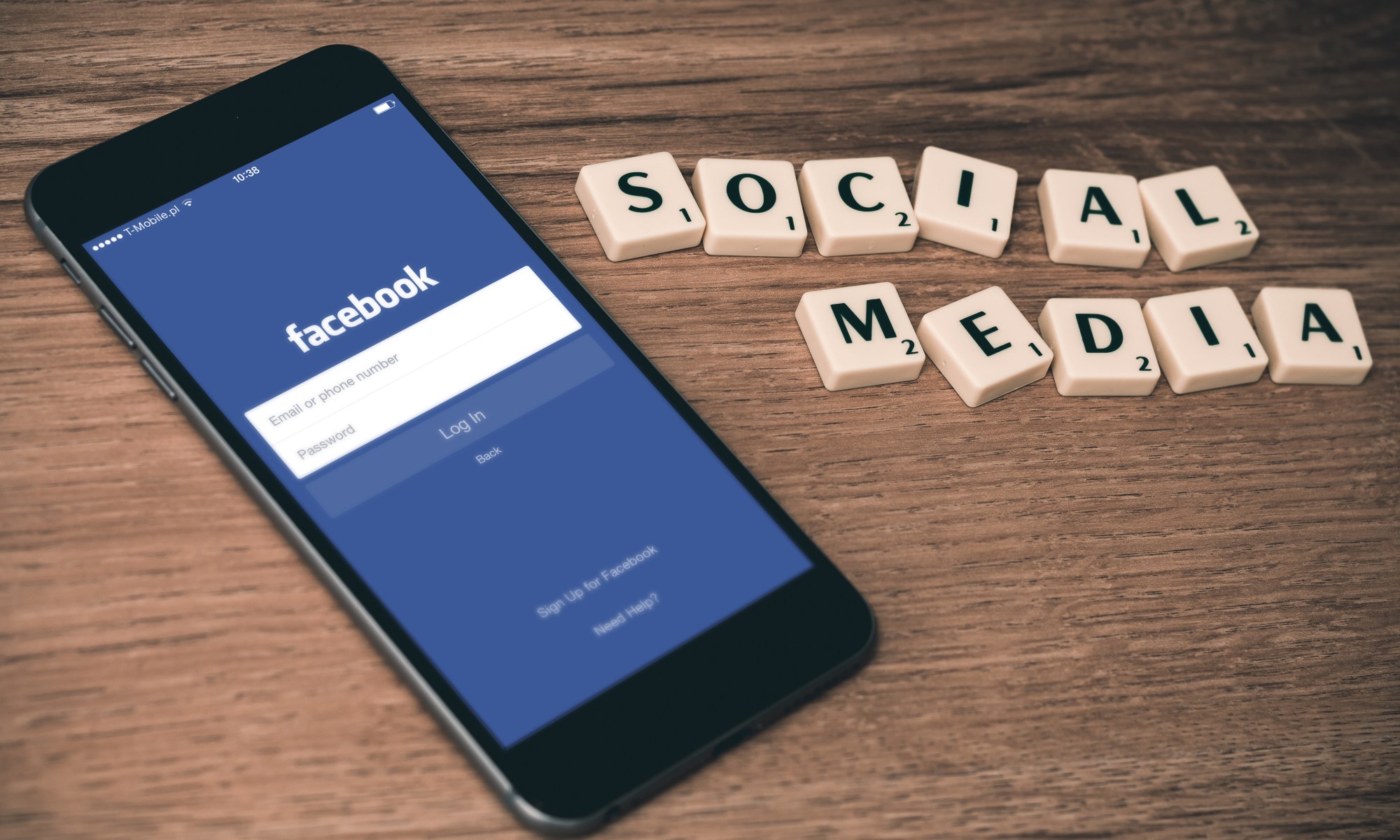
Day One (also known as Day 35)

“If you want a picture of the future, imagine a boot stamping on a human face—for ever.” 

― George Orwell, 1984

Today, November 21st, 2019, is actually one month and four days after my last trollop through the world of social media. I know this solely because the last thing I saw on my Facebook page was a link posted to me by a coworker I haven’t seen in two years or more. The link she shared was very sweet, and very specific to my interests, and I hesitated to deactivate my account for fear that she would think I was ignoring her. To my recollection, it is the only time she has shared a link on my timeline, and the first contact we have had since working together that didn’t involve something as simplistic as “CUTE!!!” on each other’s posts of our respective children.

Why would this give me pause? Why would a person that I have nothing more in common with than previous work experience and stated gender stop me from making a decision I had already concluded?

Before you read any further, let me set the record straight. I am, by all accounts, a nobody. I did not have 5,000 friends on Facebook. I had 332 (22 pending requests of people who were mutual friends or from countries far outside my realm of basic knowledge.) I did not have a million followers on my Instagram account pining to see my latest photographic magic, but rather 400. My Twitter page was a pseudonym created solely to follow celebrity drama, and had still managed to amass 44 followers, most likely bots. I am a 38 year old mother of teens, a wife of thirteen years, and a caretaker to my mother. And I dutifully and unabashedly shared my buffalo cauliflower plating and running mile per minutes times in the way that I assumed everyone else did, for the sheer reason that a digital age of transparency asks to see what you had for lunch.

To continue my previous talk of long lost coworkers, I actually replied to the link posted on my timeline, and delayed deactivating my account by 24 hours to make sure the other person had seen my reply and knew that I was touched by it. Touched by a link, a generalized copy and paste that someone had taken the time out of their technological day to share with me. Someone that I would exchange only a wave or the briefest of cordial conversation with were we to pass each other in the grocery store. This isn’t to say I don’t like the sharer, quite the opposite. I like her in the way you like most of your acquaintances, the most superficial bond of all.

Herein lies my problem. Blame it on age. Blame it on the fact that I grabbed a copy of Edward Snowden’s new book. Blame it on wasted hours of internet research that convinced me Facebook and Google and Instagram and a myriad of other websites were spying on me or tracking me or persuading me to buy things I had previously had no interest in, based on algorithms and likes and links and clicks and shares. Blame it on paranoia. Blame it on boredom with the mainstream. Blame it on regret. Blame it on misguided fingers reaching to friendships and connections that would have been lost in the throes of life 30 years ago. When social media hit its peak, I was not of the, “If you can’t beat ’em, join ’em” mindset. I was of the, “When in Rome, do as the Romans do.” Thirteen years ago, MySpace gave a then 25 year old me a place to belong. A place to introduce people to the person I wanted the world to know I was, through personalized music and digital stickers and stolen quotes, and I was ready for it.

It may seem hypocritical that I have chosen to start a blog, when I most likely will be dismissing all the most amazing aspects of social media. To connect to the entire world with a name and a password would be so mind boggling to the person I was twenty years ago, it seems presumptuous and downright ungrateful to not fully embrace it for all its technological wonder. Yet here I am, listening to 1980’s music and wishing I still stared up at the stars in the evening, rather than the dim glow of a cellphone or computer. I have no reason to convince anyone else to delete their social media accounts, I simply want to ruminate on the life that happens after I deleted mine.

This blog isn’t dedicated to finding followers, though I would be amiss to say I wouldn’t enjoy knowing that one or two people out there stumbled upon it and read it. In my dreams, as I approach the other side of my forty years on this earth and start to see a life where my children are grown and my husband I begin to claim a life that isn’t full of homework and home-cooked dinners, I want to be a writer. Full disclosure, a quick internet search of tips for becoming a better writer include starting a blog, so here I am. I will write, and I will document this life that isn’t documented through chosen snippets and quotes from authors I haven’t read. I will write until I hone my skills, until I look at a sunset and don’t wonder what caption would fit best under it, until I don’t wonder how many likes my friends received on their date night photos, until I can fully release the pull that social media had on my life, while exploring the changes it may have made that I was blissfully unaware of. Perhaps it will come off as crass, as paranoid, as attention seeking, as biased, but it will be mine, and I will put one last bit of myself into the void of the World Wide Web.

I am, as of yet, mostly unfamiliar with the workings of blog posting. Any margin errors or misplaced spaces or lackluster photos will most likely begin to improve with time.
What is even wrong with social media? (37 days away)

Personally, I would consider the years between 2012 and 2016 to be the highlight of my years on social media. I garnered the majority of my friendships on Facebook during this time, connecting to friends I hadn’t seen since middle school, or those who lived out of state. I learned to use hashtags effectively on Instagram, to find other like-minded artists or people who use the same running app as myself. The Facebook I saw in 2012 was full of shared recipe links, pictures of kids going back to school, amusing cat videos, and vague posts that were clearly directed at an unnamed individual, the comment section ripe for questions and accusations. Perhaps this was just my timeline, based on the friends I had and the people I followed.

Or, maybe it wasn’t. In 2014, the New York Times published this article, along with plenty of other news sources who picked up the story. Essentially, researchers used 689,000 Facebook timelines as a psychological experiment, to see how positive or negative words would effect the user’s posting. Yes, it was years ago. Yes, it was only a bit less than 700,000 people, a mere fraction of users. Yes, responses like those are complacent and changing our society.

To be perfectly honest, I was not outraged then, nor am I outraged now. I was always amused by those viral posts such as this: “Don’t forget tomorrow starts the new Facebook rule where they can use your photos. Don’t forget Deadline today!!! It can be used in court cases in litigation against you. Everything you’ve ever posted becomes public from today Even messages that have been deleted or the photos not allowed. It costs nothing for a simple copy and paste, better safe than sorry. Channel 13 News talked about the change in Facebook’s privacy policy. I do not give Facebook or any entities associated with Facebook permission to use my pictures, information, messages or posts, both past and future. With this statement, I give notice to Facebook it is strictly forbidden to disclose, copy, distribute, or take any other action against me based on this profile and/or its contents. The content of this profile is private and confidential information. The violation of privacy can be punished by law (UCC 1-308- 1 1 308-103 and the Rome Statute. NOTE: Facebook is now a public entity. All members must post a note like this. If you prefer, you can copy and paste this version. If you do not publish a statement at least once it will be tacitly allowing the use of your photos, as well as the information contained in the profile status updates. FACEBOOK DOES NOT HAVE MY PERMISSION TO SHARE PHOTOS OR MESSAGES.”

You see, I thought I was smarter than the people who shared those posts. I always kept my Facebook account “locked down,” with posts being made only to friends, and with literally nothing interesting enough going on in my life to make me care even if it were to all go public. I was a safe user of social media. I knew there was a chance my words and photos and likes could be made public, but why would I even care?

Thats the thing about the little screen that separates you from the internet, it feels like a shatterproof piece of glass that makes what you do on it belong solely to you. Recently, not long before I finally stepped away, I would cringe when people shared photos of their topless toddler or adorable naked babies’ bottom, though I am guilty of these things myself. Before I began to, metaphorically, look around, Facebook and Instagram felt like giant photo albums, with the convenience of sharing it to all of my friends at once. But is that really the case?

I know many excellent mothers in my real life, and quite a few online, and I can’t imagine a single one of them would hand over a photo of their toddler to a million strangers, to be cooed at or pored over or judged. When a celebrity posts a photo of their own child, perhaps dressed too maturely, perhaps not dressed enough, comments roar with one side imploring them to take it down, the other side screaming in caps lock to stop sexualizing children. I don’t agree with either of these sides anymore, because I don’t think the photo should be there. The child cannot legally consent to their photo being shared to the internet. Deep down, we all know anything we share is no longer in our control once we press send. Thats the contract we sign when we sign up for any internet convenience. The terms and conditions may state otherwise, but terms like “data breach” and “hacked” are far too common to truly think any company fully has control.

So, does it even matter? Its just a photo. Its just an experience. Its just a statement, no different than the statements I’m making here. I think the seriousness is up to the user. To my knowledge, none of my children’s photos were “stolen,” despite a public instagram page that I frequently hashtagged to collect stranger’s eyes. My question isn’t so much, does it matter, but instead, why doesn’t it matter? When did we go from a world of “stranger danger” to full on transparent lives?

Its funny, I often hear people say they are very precise with what they choose to share on the internet. That they keep most of their life private. Yet, their dinner photo is tagged at the location of the restaurant they’re eating at. Their son’s preschool graduation photo is hashtagged #headedtokindergarten, #growinguptoofast, #mommaslittleboy. Again, I am not judging. I have done these things. I have simply decided I don’t want to anymore, and explore the deeper reasons I have started to think this whole thing is a very, very bad idea, for myself and society.

Day Four (Also known as Day 38)

My most recent delve into a life off of the online grid is not my first. In 2016, I began to realize that social media was negatively effecting me in ways that went beyond the “fear of missing out.” On July 7, 2016, Michael Xavier Johnson shot and killed five police officers and injured nine others in Dallas, TX. This was not long after protests had broken out over the shootings of two men by police officers. I did not know these people, and I have no familial associations with police officers or civil servants. As I randomly scrolled through my facebook feed, I noticed that a race war/police support war had broken out. My friends who had posted articles about the shooting were twenty comments deep in arguments about whether or not “those guys deserved it,” thoughts and prayers floated through the digital air, droplets of well intended hope that were as useful to the situation as the keyboards they were written on. Gun control was hot and heavy, with a lot of opinions and very little action. Everyone had staunchly taken a side, and in between, shared photos of cocktails or hikes or memes.

I deactivated my Facebook profile. Not only did the news I was reading seem skewed or biased, I couldn’t keep myself from scrolling past the article, into the comment sections, where people I will never meet threw verbal insults at each other, thinly veiled racist attacks along with demands of protection for the 2nd Amendment. Not long before this, I had happily declared that I received almost all of my news from Facebook, and it took me a few years beyond this to realize what a terrible idea this was.

I did not know at the time that much of the news I was seeing was balanced and curated for me, a computer algorithm that grouped me with people similar to myself, to show us what it perceived we wanted to see. I did not know that Facebook would soon be embroiled in legal issues, with its failure to stop hoaxes and inaccuracies from reaching millions as the infamous 2016 election ramped up. What I knew at the time, was simply that there was a lot of anger and sadness in my little handheld device, and that anger and sadness was giving me a sense of hopelessness. Was a race war on the horizon, as the collective internet I was privy to seemed to believe? My Twitter account showed David Duke screaming into the void, exploiting the hashtags #waronwhites and #makeamericagreatagain.

I didn’t look for David Duke on Twitter. One person retweeted one thing, something about how horrendous the man was, and I clicked it. I clicked hashtags, I read the vile hatred, I glanced at profiles to see what a human that inherently hated another human looked like. My twitter timeline changed quickly, though I didn’t bother to delete it then. Sponsored posts were no longer jewelry or celebrities, but political minded opinions that were very one sided.

I remained on Instagram, posting about exercise, or maybe a quote that seemed to reflect my feelings at the time, probably a meal at a restaurant that looked just like the same meal anyone else could have posted.

I stared at my phone. A lot.

Design a site like this with WordPress.com
Get started